

Business is fundamentally about creating value. According to Harvard Business School Online, regardless of a business’s size, industry, or model, its success depends on one thing: creating value for customers (Heinrich, 2026).
At its core, a business succeeds when it offers a product or service people want to buy at a price higher than the cost of production. Value creation is the process of turning raw materials, ideas, and resources into products or services which are worth more than the cost of making them. It involves solving problems, improving lives, and delivering solutions people want to pay for. By generating value for customers, employees, and stakeholders, a business builds long-term loyalty, drives innovation, and ensures sustainable financial success.
The Meaning of Value in Business
To understand value creation, we must understand what value is in business. Depending on the context, value is usually divided into three main categories: customer value, the financial worth of the business (for example, stock value), and perceived value, as discussed below.
Customer Value (The “What you give” vs. “What you get”)
This is the net benefit a customer receives in exchange for the price they pay. It is subjective and entirely determined by the buyer.
Why Customers Drive Value Creation
Among a business’s stakeholders, customers are most important in the value-creation process. Customers are the ultimate source of revenue and the reason a business exists, meaning all other value created for stakeholders depends entirely on whether a customer is willing to pay for a product or service.
Business Value (The financial worth of a company)
In finance, value is the actual monetary worth of an enterprise, its assets, or its equity.
Business Value (Health and longevity)
In management, this refers to all the tangible and intangible elements that determine a company’s long-term well-being. It includes economic profits and intangible assets, such as brand reputation, intellectual property, employee morale, and supplier relationships.
Harvard Business School Online defines business value as “…..the worth in monetary terms of the technical, economic, service, and social benefits a customer company receives in exchange for the price it pays for a market offering” (Anderson and Narus, 1998) and categorises it into two main types: financial value (hard numbers) and perceived value (customer sentiment) (Boyles, 2022). Together, they determine a company’s overall worth and market success.
Here is how you can describe and measure both types:
Financial Value
Financial value represents the direct, quantifiable economic impact a business or product delivers. It focuses on the bottom line, revenue, and cost savings.
Perceived Value
Perceived value is the subjective worth a customer places on a product, service, or brand, based on their personal feelings, beliefs, and experiences.
In summary, financial value is what a business is worth on paper, while effective value creation delivers measurable advantages for an organisation.
The Relationship between Value and Strategy- The Value Stick Framework
The main importance of a business strategy is to align an organisation’s goals, resources, and actions so it can create long-term value for the business, its customers, and its stakeholders.
As stated on Harvard Business School Online, a strong strategy acts as a master plan that drives success. It provides several key benefits.
A business strategy is defined as “…. the strategic initiatives a company pursues to create value for the organisation and its stakeholders and gain a competitive advantage in the market” (Boyles, 2022). An effective business strategy is built around three core questions focusing on how a business can create value for customers, employees, and suppliers. Organisations can address these areas using a value-based approach, such as the Value Stick framework, by increasing customer willingness to pay, supporting employee growth, and lowering supplier willingness to sell. The Value Stick is a framework developed by Felix Oberholzer-Gee, a professor of business administration at Harvard Business School
According to Harvard Business School Online (Heinrich, 2026), value is the difference between how much a customer values a product or service and what they’re willing to pay for it.
To increase value, a business needs to do two fundamental things.
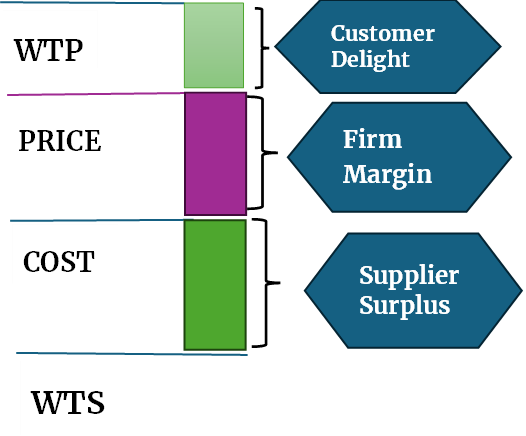
Figure 1- The Value Stick. Source: Adapted from Harvard Business School Online (Heinrich, 2026)
Strategic value creation relies on expanding the gap between what a customer values and what suppliers or employees require. Four main elements define this balance:
Willingness to Pay (WTP) varies among customers because people perceive value, face different financial constraints, and have unique alternatives.
Main Factors Causing WTP to Vary
Willingness to Pay vs. Willingness to Sell
Willingness to pay (WTP) is the highest price a customer will pay for a product or service, while willingness to sell (WTS) is the lowest amount a supplier or employee will accept for materials or labour. WTP applies to customers, whereas WTS pertains to employees and suppliers. That is their main difference.
Both concepts form the outer boundaries of the Value Stick Framework, helping businesses understand how value is created and captured in a market.
Main Differences
Strategic Application
Value Creation and Building a Business
Digital Leadership describes value creation in business as “… a multifaceted strategy for attaining enduring success. It goes beyond mere financial aspects, weaving together stakeholder relationships, innovation, efficiency, and distinctiveness” (Dieffenbacher, 2024).
A strong value-creation and business-building strategy relies on three fundamental pillars to maximise enterprise value.
The Four Main Levers of Business Value
Building a business revolves around a core equation: making your offerings uniquely desirable to customers while systematically optimising your operations. It’s the process of transforming ideas into tangible worth by driving profitability, managing cash flow, and building a distinct competitive advantage.
To build lasting enterprise value, you need to balance four main components:
Main Ways of Extracting Value
When looking at scaling and extracting value from a business, strategies generally fall into a few clear categories:
Value Creation and Unique Value Proposition (UVP)
Value creation is the process of producing something of worth, such as a product, service, or experience, that meets customer needs while generating profit and stakeholder returns. A Unique Value Proposition (UVP) is a clear, concise statement that explains why a customer should buy that specific offering instead of from a competitor.
Value creation aligns what customers want, what the organisation builds, and what stakeholders expect. It has an amplification effect because satisfied customers drive loyalty, strong returns attract capital, and valued employees increase innovation and productivity. It provides a cost-benefit balance because it delivers a positive net worth where the perceived benefits significantly outweigh the monetary and time costs.
To build your business efficiently, you must pinpoint exactly how your offerings stand out in the market. A Unique Value Proposition (UVP) is a clear, concise statement that explains how your product solves customer problems, what specific benefits it delivers, and why you are the better choice over competitors. It translates your core competitive advantage into a compelling message for your target audience.
Key Elements of a Value Proposition
A strong value proposition relies on core elements that clearly explain who you serve, what problem you solve, and why your offer is better than the alternatives.
Characteristics Of Effective Unique Value Proposition Messaging
Effective unique value proposition (UVP) messaging is a clear, concise statement that instantly tells customers how your product solves a specific problem and why it is better than the competition.
Here are the key characteristics of a strong UVP message:
Clarity.
Being clear, transparent, and easy to understand, see, and hear.
Relevance
Differentiation
Specificity
Conciseness
Every highly effective UVP answers three critical questions at a glance:
Customer-centric focus ensures your products or services solve specific pain points and exceed customer expectations. The 3 C’s framework: analysing the intersection of your Customers, Competitors, and unique organisational Capabilities helps to craft a desirable and viable business model.
Common Differentiator Categories
To achieve true “uniqueness,” your business generally stands out in one of these core areas:
UVP vs. Slogan
While a tagline (like “Just Do It”) is designed to be catchy and memorable, a UVP focuses entirely on the practical utility and specific edge your business offers.
Example Framework
According to Harvard Business School Online, a unique value proposition should answer the following questions:
A standard, proven framework to construct your own UVP is:
“We help [Target Audience] solve [Specific Problem] by offering [Key Benefit], unlike [Alternative Competitor] because of [Unique Differentiator].”
Build Scalable Systems
Building a business requires repeatable, efficient processes rather than manual interventions.
The Jobs to Be Done (JTBD) Theory
The Jobs to Be Done (JTBD) Theory is a business and innovation framework stating that people do not simply buy products or services; they “hire” them to make progress or accomplish a specific goal in a given circumstance (Miller, 2026).
Popularised by Harvard Business School professor Clayton Christensen and innovator Anthony Ulwick, the theory shifts focus from traditional customer demographics (like age, income, or gender) to the core functional, social, and emotional motivations for choosing to purchase from that business.
Main Tenets of JTBD Theory
Real-World Example – The Milkshake Marketing
In a famous study cited by Christensen via the Clayton Christensen Institute, a fast-food restaurant wanted to increase milkshake sales. Instead of asking customers what features they wanted in a milkshake, researchers asked what job they hired the milkshake for. They discovered that most milkshakes were bought early in the morning by commuters. They weren’t looking for dessert; they needed something thick and satisfying to keep them from getting hungry or bored during a long, tedious drive, and it had to be easy to consume with one hand. Knowing this “specific job” allowed the restaurant to improve the product by making it thicker and adding fruit chunks to last longer.
Align Stakeholder Value
A successful business model benefits everyone involved:
Benefits of Value Creation
Effective value creation delivers measurable advantages for an organisation:

Value Creation and Building a Business
Value creation and business modelling form the literal engine of an enterprise. They drive how a company identifies an unmet need, translates it into a tangible offering, and strategically structures operations to generate continuous revenue. Value creation is the gap between how much a customer values your product and what they are willing to pay for it. Building a business model means designing how you will create, deliver, and capture that value. The business model acts as the vehicle that turns customer solutions into revenue.
The relationship between the two relies on a straightforward flow:
Together, these three pillars ensure that your business goes beyond just selling a product; it builds a system that continuously satisfies customers, partners, and shareholders.
The Framework for Success
Frameworks like the Business Model Canvas act as a diagnostic toolkit that brings together all moving parts. A robust business model links together:
- Customer segments. The specific audiences your enterprise targets.
- Channels. How you communicate and deliver value to those segments.
- Cost structures and revenue streams. Balancing the financial inputs and outputs to ensure long-term viability.
For modern businesses, value creation is no longer just about financial gain. Future-proof models increasingly account for social, operational, and environmental impacts to foster long-term market relevance. By deeply integrating these elements from “day one,” founders can avoid flawed foundations and scale a resilient company.
The ultimate importance of value creation manifests in several critical ways:
Building and Modelling the Business
Building a business involves aligning 4 main building blocks: resources, products or services, processes and technology. However, traditionally, people, the most important part of the resources and process, have largely been ignored. The use of design in business, especially in innovation, has rekindled interest in recent years as academics and practitioners seek non-traditional ways to solve problems because challenges escalate and become too complex for traditional methods.
The Design Thinking Approach
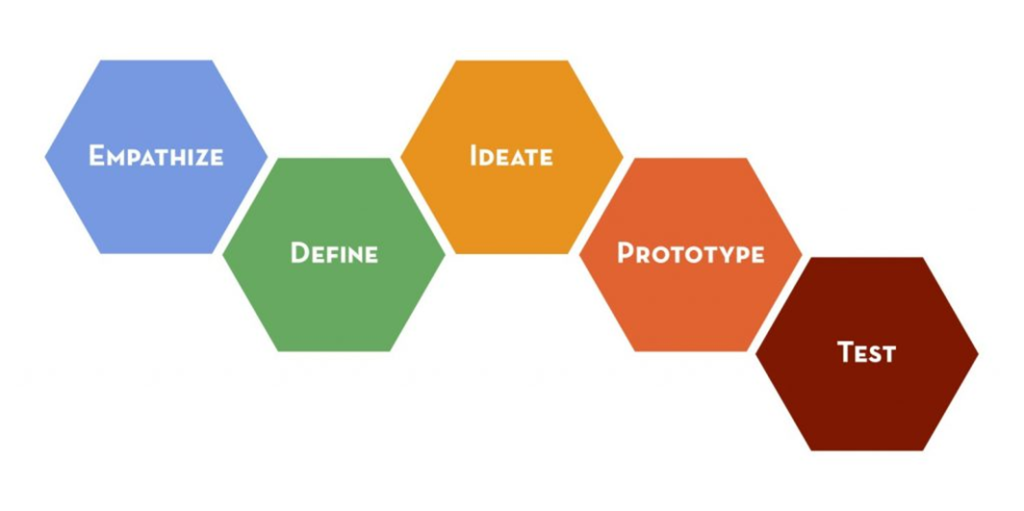
Figure 1. The Design Thinking Process. Source: Introduction. pressbooks.pub. [online] Available at: https://pressbooks.pub/innovationbydesign/chapter/introduction/.
Design thinking in business formation is a human-centred approach to entrepreneurship. It mitigates startup risk by prioritising deep customer empathy, rapid prototyping, and iterative testing before investing heavily in production, ensuring the resulting business model is highly desirable, technically feasible, and financially viable. It was popularised primarily by the global design firm IDEO, specifically founders David Kelley and Bill Moggridge, alongside CEO Tim Brown, and the Stanford Design School. Together, they transformed it from a niche academic concept into a mainstream, human-centred business strategy.
The methodology transforms the traditional business plan into a living, market-responsive framework using five iterative stages:
Empathise
Instead of building based on assumptions, founders conduct deep field research to understand user pain points, behaviours, and latent needs. This can be achieved by conducting one-on-one interviews, observing target demographics in their environment, and mapping out customer journeys.
Define
Synthesise the research to articulate a clear “point of view” and define the core problem the new business will solve. This can be achieved by creating “How Might We” (HMW) statements that transform customer frustrations into actionable opportunities (e.g., How might we streamline the grocery shopping experience for busy commuters?).
Ideate
Brainstorming a wide variety of wild, unconventional solutions without immediate judgment. You can use techniques such as mind mapping, worst-possible-idea generation, and sketching to break out of conventional market thinking.
Prototype
Building a scaled-down, inexpensive version of your product, service, or business model to bring the ideas to life. For example, landing pages, wireframes, physical mock-ups, or role-playing a service flow can be used for quickly and cheaply testing your idea.
Test
Sharing your prototypes directly with your defined customer segment to gather raw feedback and learn what works and what doesn’t. By observing user interactions with the prototype, refining the proposition, and looping back to earlier stages to improve the concept.
The Three Pillars of Feasibility
To ensure the business formation is sound, every designed solution must balance three core constraints outlined by IDEOU (IDEO U., 2026).
The Business Model
A business model is a company’s blueprint for how it creates, delivers, and captures value. It defines what a business offers, who its target audience is, and the specific methods it uses to make a profit and sustain operations.
Clayton Christensen, a Harvard Business School professor, developed the Business Model Theory. It is a framework that consists of four interlocking elements that together create and deliver value. These are value propositions, resources, processes and revenue formula or profit.
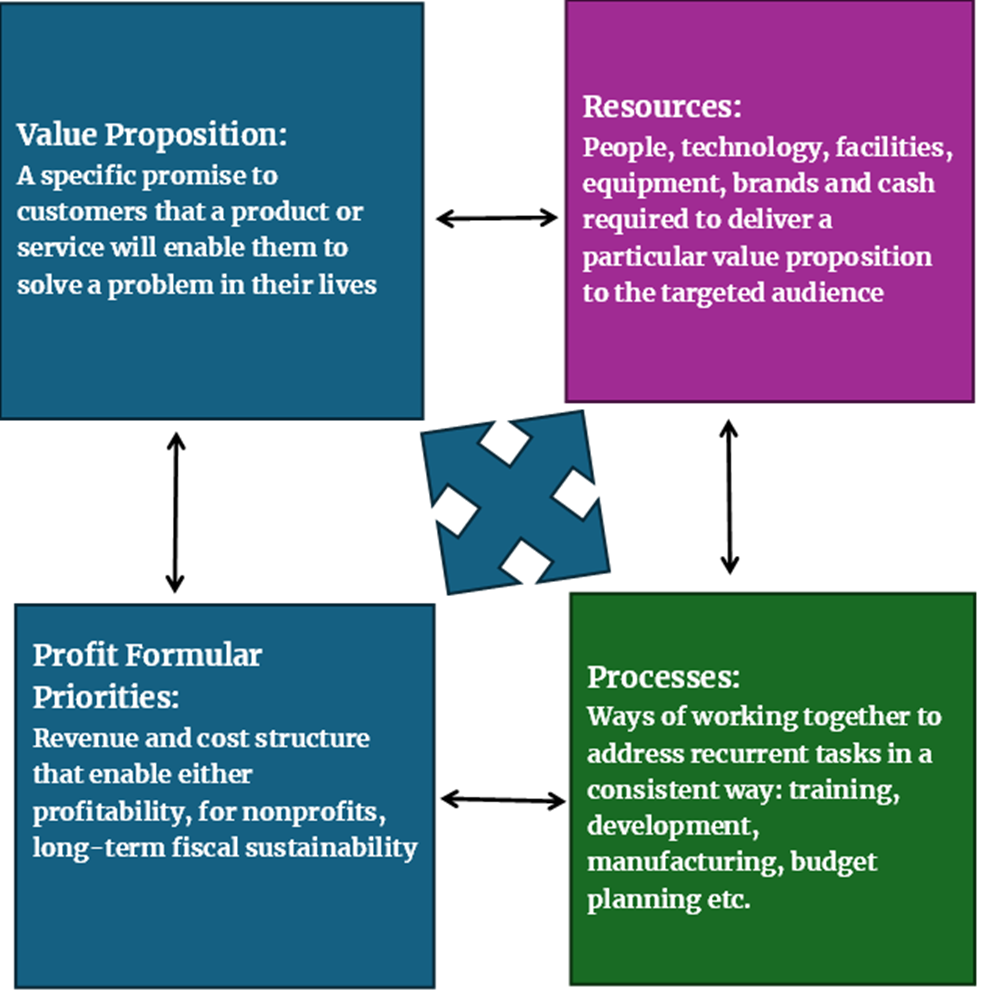
Figure 2: The Four-Box Business Model. Source: Clayton Christensen Institute
The model is important because it can predict whether a given organisation’s initiatives will succeed or fail.
The Business Model Canvas
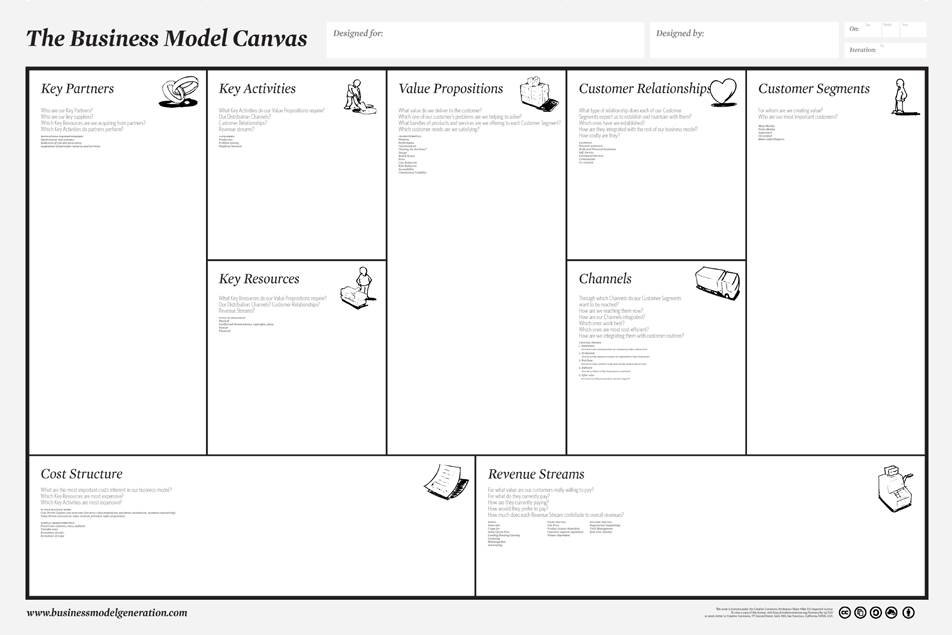
Figure 3: The Business Model Canvas. Source: Swanson, L.A. (2017). Chapter 4 – Business Models. pressbooks.bccampus.ca. [online] Available at: https://pressbooks.bccampus.ca/entrepreneurship/chapter/chapter-4-business-models/.
The Business Model Canvas (BMC) is a strategic, one-page visual template used to map, discuss, and invent business models. Created by Alexander Osterwalder, it outlines how an organisation creates, delivers, and captures value across nine interconnected building blocks.
Like the Design Thinking Process, the BMC Is Suitable for quickly testing assumptions
Like the Design Thinking Process, the BMC Is Suitable for quickly testing assumptions.
The Business Model Canvas can be used to test assumptions. Assumption testing is a structured process for identifying and evaluating the riskiest foundational beliefs underlying an idea, product, or statistical model. Isolating and testing specific variables early prevents wasted effort and provides rapid, actionable data for decision-making.
When planning to start a business, traditionally, people are asked to gather data and develop a business plan, including the main financial statements. This can be done by sitting at your desk and estimating figures on the assumption that people will accept whatever you sell to them. The era of hard selling was based on the idea that people would buy if the salesman were persuasive enough. The situation is different now because customers are more aware of what they want.
In business and product design, assumption testing breaks down an idea into its fundamental requirements to see if they hold before committing to full-scale development. Teams primarily test four types of assumptions:
The Business Model Canvas, on the other hand, helps to identify and define the assumptions of the new venture and to test them in the field by speaking with customers or other stakeholders. Like the design thinking approach, the Business Model Canvas above is like a prototype. It specifically focuses on testing assumptions rather than gathering data only, and in this way, enables validated learning.;
In this way, the value-creation, execution, scalability and defensibility tests for a new venture can be done simultaneously. Like design thinking, which is option-focused, the business model approach is a way of searching for a suitable business model.
The 9 BMC Building Blocks
The canvas organises a business into four main areas and explores value through the four core pillars: Value Creation, Value Proposition, Value Delivery, and Value Capture.
Value Creation (The Backbone)
These are the internal operations and relationships needed to produce your value proposition.
Value Proposition (The Core)
Value Propositions are the unique bundle of products or services that solves a customer’s specific problem or satisfies a distinct need. This is why a customer will choose you over a competitor.
Value Delivery (The Interface)
This pillar defines how you interact with the market and get your value to the right people. It identifies who your customers are, how you reach them and the kind of relationship you build with them. These are:
Value Capture (The Finances)
This pillar translates your value creation and delivery into financial viability.
Ways It Is Useful in Designing a Business
The BMC is useful for designing a business in the following ways:
Business Building Framework
The Business Building Framework is our adaptation of the Business Model Canvas, specifically for new ventures, to help link the opportunity, the business environment, and the timing.
| Vision, Values and Mission What is your vision? Do you want to change the world? What is the story behind your business that you want people to tell about your business? What are your core values? |
| Resources | The Opportunity and Timing in the Business Environment | The Problem |
| Where are you now, and do you have the capabilities required to launch the business? | What is the opportunity you have spotted in what sector or industry you are interested in? Is the timing right? | What problems exist in your area of interest that you are solving? |
| Solutions | Customer Segment | Unique Value Prop[osition (UPS) |
| What solutions do you have to solve the problems? Are they authentic and feasible? | Who are your ideal customers in the market? Is your market segment large enough to sustain your business? | What value are you offering that will make customers prefer your offerings? It is not about how good your solution is; it is about how much better it is at solving customers’ problems that it differentiates you from competitors. |
| Strategy | Channels |
| What is it that you have, and what activities or actions will you take to give you an advantage, and how can you sustain it without being imitated or bought? | What channels will you use to reach and connect with your customers? |
| Cost Structure | Revenue Structure |
| All businesses incur costs through operation, whether fixed or variable. They may also face economies of scale and scope. Companies consider their cost structures in two strategies: cost-driven, where all costs are reduced wherever possible, and value-driven, where the focus is on greater value creation. Do you know what your costs are? Are they mainly fixed or variable? | What are the sources of revenue and in what form are they going to be received e.g. through sales or subscriptions? |
| Measurement |
| How are you going to measure whether things are working per your original idea or whether to change course? If things are not working as expected, it should not be a surprise. It is an opportunity to rethink. |
Table 1- Business Building Framework. Source: Adapted from the Business Model Canvas
Expanding on Value. The Value Proposition Canvas
While the BMC looks at the business as a whole, if you need a deeper, more granular look into the “Value Proposition” section, you can use the Value Proposition Canvas as a companion tool. It focuses specifically on the “fit” between your product features and your customers’ specific jobs, pains, and gains.
The Value Proposition Canvas
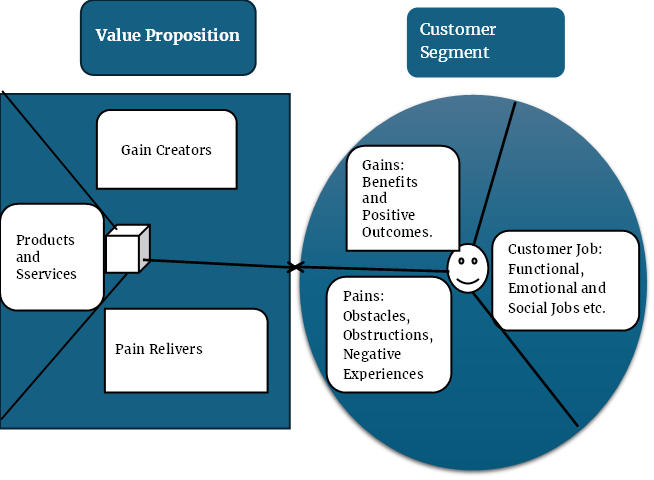
Figure 4: The Value Proposition Canvas. Source: Adapted from Strategyzer (2025). Value Proposition Canvas. [online] strategyzer. Available at: https://www.strategyzer.com/library/the-value-proposition-canvas.
The Value Proposition Canvas is a strategic tool designed to help businesses ensure their products or services perfectly match the needs of their target audience. Created by Dr Alexander Osterwalder, Yves Pigneur and Alan Smit, it acts as a detailed zoom-in on the “Customer Segments” and “Value Proposition” blocks of a broader Business Model Canvas.
IxDF defines it as “…. a tool businesses and designers use to analyse, evaluate and adjust the value proposition of their product or service to align with their customers’ requirements” (IxDF – Interaction Design Foundation, 2024, September 25).
The canvas is split into two main sections: the Customer Profile (on the right) and the Value Map (on the left).
The Customer Profile (The Right Side)
This section defines your target audience and breaks down exactly what they are trying to do:
The Value Map (The Left Side)
This section outlines how your product or service creates value for the customer:
- Products & Services. A clear list of what you offer (e.g., physical goods, software, or services).
- Pain Relievers. Specific ways your product alleviates the customer’s specific pains.
- Gain Creators. How your product delivers the outcomes and benefits the customer is looking for.
Why and When to Use It
References
Anderson, J. and Narus, J. (1998). Business Marketing: Understand What Customers Value. [online] Harvard Business Review. Available at: https://hbr.org/1998/11/business-marketing-understand-what-customers-value.
Boyles, M. (2022). How Do Businesses Create Value for Stakeholders? | HBS Online. [online] Business Insights Blog. Available at: https://online.hbs.edu/blog/post/how-do-businesses-create-value.
Cote, C. (2025). How to Create an Effective Value Proposition. [online] Harvard Business School Online. Available at: https://online.hbs.edu/blog/post/creating-a-value-proposition.
Christensen Institute. (n.d.). Jobs to Be Done Theory. [online] Available at: https://www.christenseninstitute.org/theory/jobs-to-be-done/ [Accessed 9 Sept. 2026].
In-text citation: (Christensen Institute, n.d.)
Fernandes, Sânia & Rosa Cencic, Maiara & Queiroz, Carolina & Rozenfeld, Henrique. (2018). AN INITIAL PROTOTYPE OF A TOOL FOR DEFINING VALUE PROPOSITION IN THE PRODUCT-SERVICE SYSTEM (PSS) DESIGN. 281-292. 10.21278/idc.2018.0433.
Han, E. (2022). What is design thinking & why is it important? [online] Harvard Business School Online. Available at: https://online.hbs.edu/blog/post/what-is-design-thinking.
Heinrich, A. (2026). How Value Creation Applies to Your Business. [online] Harvard Business School. Available at: https://online.hbs.edu/blog/post/value-creation.
Hoopes, C. (2024). Business Models. [online] Foundations of Commerce. Available at: https://pressbooks.library.virginia.edu/foundationsofcommerce/chapter/business-models/.
IDEO U. (2026). Design Thinking Framework, Innovation & Methodology. [online] Available at: https://www.ideou.com/en-gb/pages/design-thinking?srsltid=AfmBOoqgMEvPGPTq8DVaJHHoRs18-5OxWRq3HKWxEYVARNYMX0hWFx8w [Accessed 26 May 2026].
IMD (2026). Value creation in business: importance, concepts, & examples. [online] www.imd.org. Available at: https://www.imd.org/blog/marketing/value-creation-in-business/.
IxDF – Interaction Design Foundation. (2024, September 25). What is The Value Proposition Canvas? IxDF – Interaction Design Foundation. https://ixdf.org/literature/topics/value-proposition-canvaseferences
Matrix, S. (n.d.). Introduction. pressbooks.pub. [online] Available at: https://pressbooks.pub/innovationbydesign/chapter/introduction/.
Miller , K. (2026). The Jobs to Be Done Framework Explained & Real-World Examples. [online] Harvard Business School Online. Available at: https://online.hbs.edu/blog/post/jobs-to-be-done-examples [Accessed 9 Sept. 2026].
In-text citation: (Miller , 2026)
Swanson, L.A. (2017). Chapter 4 – Business Models. pressbooks.bccampus.ca. [online] Available at: https://pressbooks.bccampus.ca/entrepreneurship/chapter/chapter-4-business-models/.
Strategyzer (2025). Value Proposition Canvas. [online] strategyzer. Available at: https://www.strategyzer.com/library/the-value-proposition-canvas.