

There are various approaches to transforming ideas into actionable, sustainable ventures. The most preferred frameworks include the Lean Startup for rapid validation, Business Model Canvas for mapping structure, and Design Thinking for problem-solving. These tools accelerate growth and aid decision-making by enabling rapid experimentation and risk reduction. They provide a structured approach to transforming an idea into a legal entity, creating a strategic business plan, securing funding, and implementing operational processes to drive growth, often using lean methodologies such as the “build-measure-learn” loop.
For example, Duke University’s Entrepreneurial Process breaks the entrepreneurial process into five phases: idea generation, opportunity evaluation, planning, company formation/launch, and growth (Duke, 2022).
The Build-Measure-Learn (BML) Loop
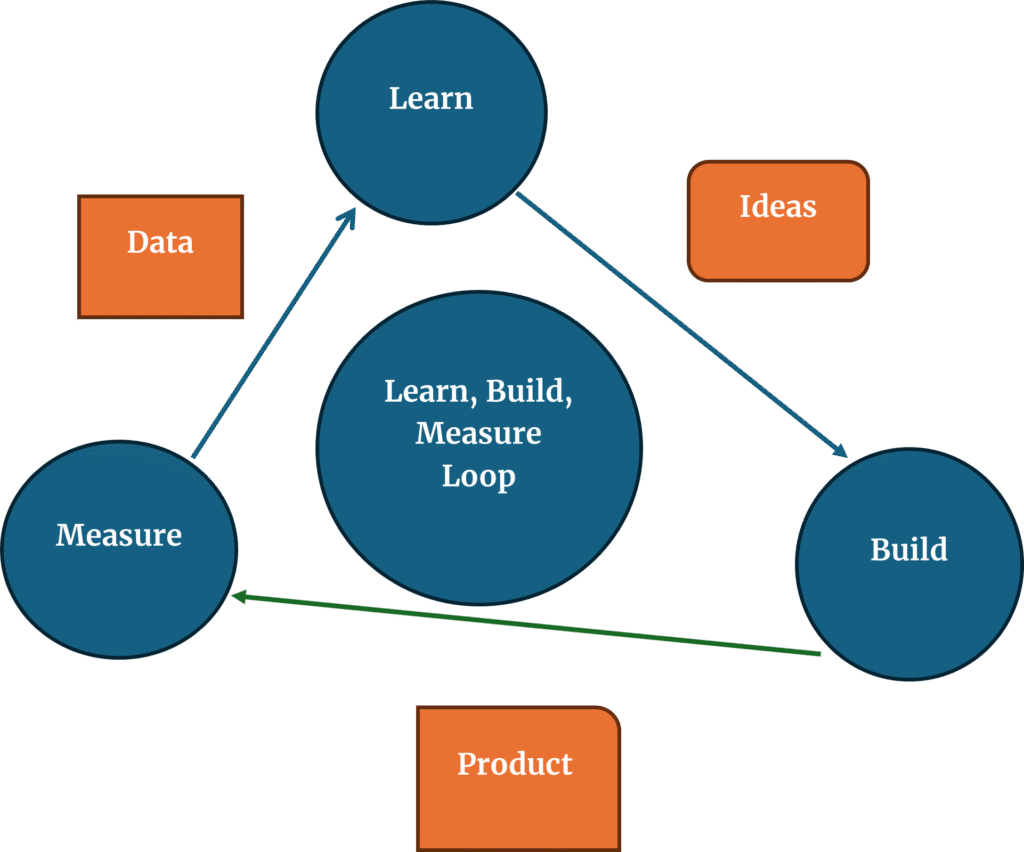
Figure 1: The Build-Measure-Learn (BML) Loop: Source the Lean Startup Methodology (Ries, 2015).
The Build-Measure-Learn (BML) loop is a core Lean Startup methodology designed to minimise waste and accelerate product development. It is an iterative process in which teams build a Minimum Viable Product (MVP), measure customer interactions using actionable metrics, and learn whether to pivot or persevere, aiming to reduce the total time through the cycle (Frederiksen and Brem, 2017).
A Minimum Viable Product (MVP) is the version of a new product that allows a team to collect the maximum amount of validated learning about customers with the least effort. It features only core functionalities required to satisfy early adopters and validate product demand, reducing development risks and costs (Ries, 2015). It is easy to misunderstand the reasoning behind the MVP. The purpose of a Minimum Viable Product (MVP) is to test a product concept, validate assumptions, and gather maximum validated learning about customers with minimum effort. It enables organisations to launch quickly to a niche audience, reducing development costs and risks by gathering real-world feedback before fully investing.
The concept of a Minimum Viable Product (MVP) absolutely applies to services, often referred to as a Minimum Viable Service(MVS) or a Concierge MVP. As with physical products, the goal is to validate a business idea, test customer demand, and gather feedback with the least amount of effort and cost before fully investing (Hovhannes, 2025).
Main Stages of the Loop
Usage Examples and Scenarios
Synonyms and Similar Concepts
The Main Principles of BML Loop
Our Entrepreneurial Framework
Our entrepreneurial framework follows the same structured process and model used to turn ideas into value-creating ventures, involving three main stages: connection, design and creation, and execution. It is adapted from the Business Model Canvas, the Lean Startup Model, Design Thinking and the Duke University Entrepreneurial Process, which break the entrepreneurial process into five phases: idea generation, opportunity evaluation, planning, business formation/launch and growth (Duke, 2022).
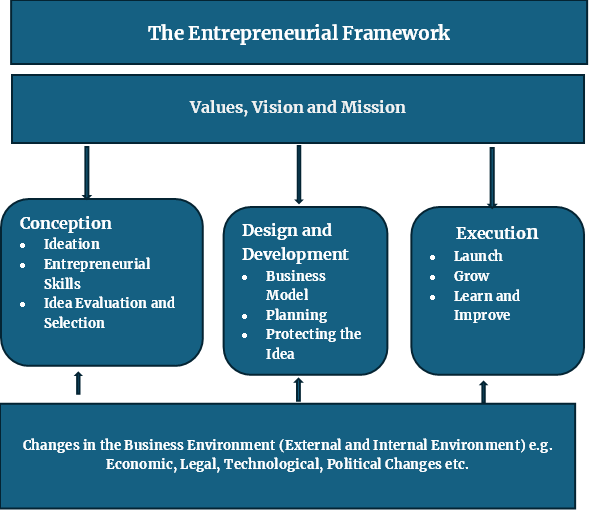
Figure 2 – The Entrepreneurial Framework. It Is an Adaptation of the Business Model Canvas, the Design Thinking Process, the Lean Methodology and the Duke University Entrepreneurial Framework.
The Business Model Canvas (BMC)
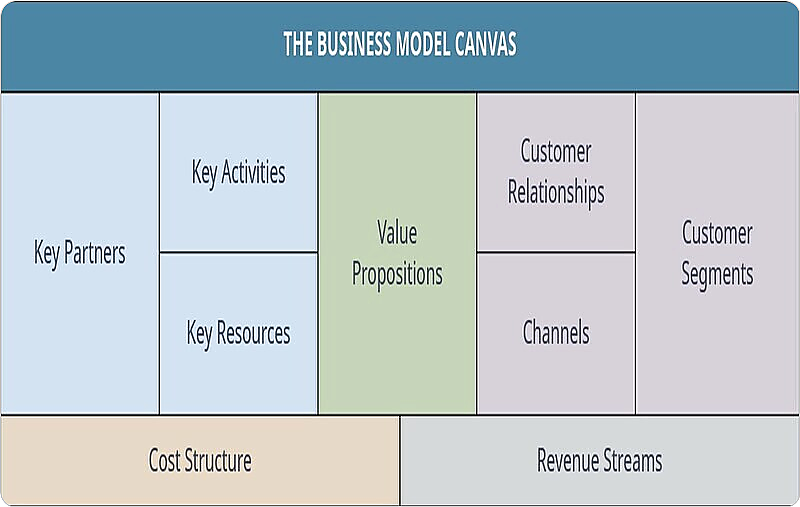
Figure 3: Business Model Canvas Shared Authored, Remixed, and/or Curated by LibreTexts
The Business Model Canvas (BMC) is a strategic, one-page template used to visualise, design, and assess a company’s value proposition, infrastructure, customers, and finances. Developed by Alexander Osterwalder, it breaks down a business into nine essential building blocks—covering key partners, activities, resources, value propositions, customer relationships, channels, segments, cost structure, and revenue streams. It is ideal for startups or pivoting existing businesses
The Design Thinking Process
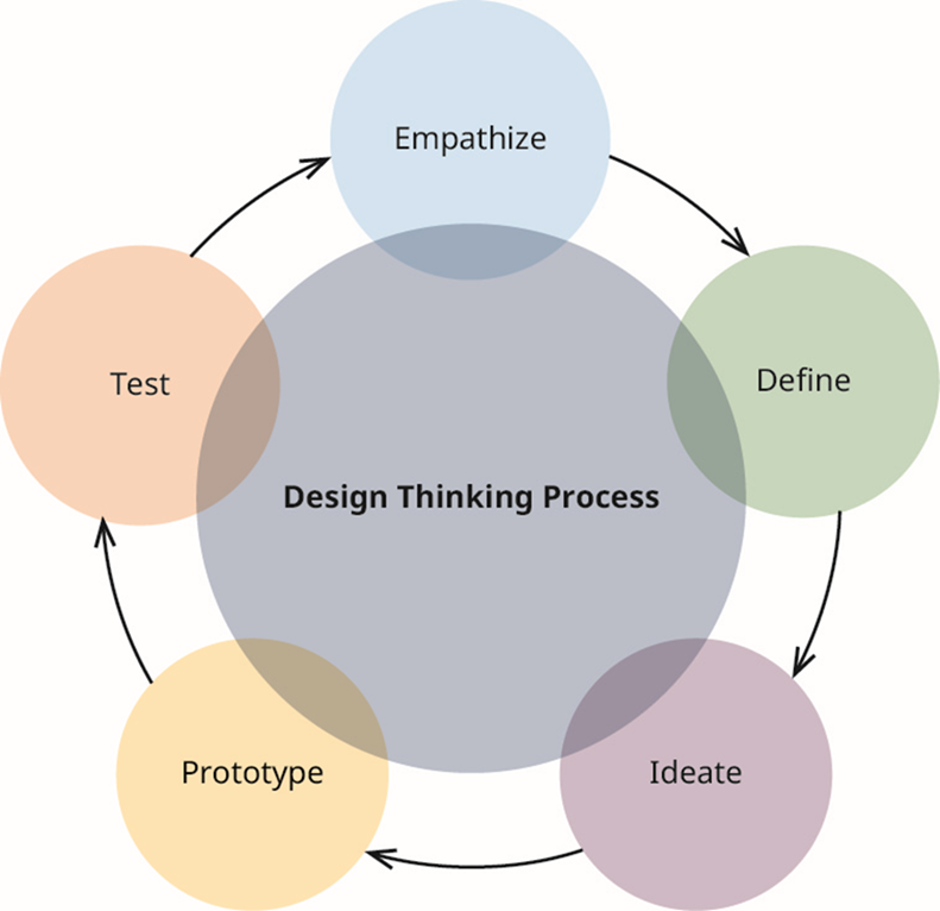
Figure 4: The Design Thinking Process Shared Under CC License and Authored, Remixed, and/or curated by LibreTexts
Design thinking in business is a human-centred, iterative methodology for solving complex problems and fostering innovation by focusing on deep user empathy, prototyping, and testing. It bridges creativity with practical business needs, helping teams redefine problems and create, test, and implement user-centric solutions.
Back to Our Entrepreneurial Framework
Now that we have introduced the main frameworks for starting a business today, we will continue our discussion on our Entrepreneurial Framework. Our Business Start-up Framework simply divides the process of starting a business into three main categories: conception, design and development, and execution. It provides a summary of what to do at each stage. It is a very good portrait to start with.
Business Conception
This includes:
Design and Development.
This includes:
Product Development (MVP)
Essential Stages of Development
Key Success Factors

Summary of the Key Stages of Starting a Business
Breaking down starting a business into the main stages and processes is convenient, enhances understanding and provides a checklist to ensure that the process is thorough. Fortunately, these stages have been studied by academics and practitioners, resulting in the recognition of proven steps that, if followed in the right order, can help to provide a solid foundation for success.
The Three-Stage Process:
Key Aspects of the Entrepreneurial Journey
This framework is crucial for developing a sustainable business.
The Main Stages of Starting and Managing a Business
- Idea generation and evaluation. Developing a business concept and verifying its viability through market research, assessing competition, and determining if it solves a real-world problem.
- Planning and strategy. Writing a detailed business plan that outlines the company’s mission, product, target market, marketing strategies, and financial projections.
- Company formation and launch. Legalising the business by choosing a structure (e.g., LLC, Corporation), registering for taxes, and establishing the operational infrastructure.
- Operations and management: Running the day-to-day business, which includes managing finances, hiring talent, building a brand, and creating operational workflows.
- Growth and sustainability: Scaling the business by establishing a loyal customer base, managing cash flow, and adapting to feedback through a “build-measure-learn” approach.
Common Pitfalls to Avoid
Key Startup Phases
The Main Stages of Starting and Managing a Business
Common Pitfalls to Avoid
References
Bernstein, P.A. and Newcomer, E. (2009). Chapter 5 – Business Process Management. [online] ScienceDirect. Available at: https://www.sciencedirect.com/science/article/pii/B9781558606234000056 [Accessed 1 Feb. 2023].
Business LibreTexts. (2025). 3.1.5: Frameworks to Inform Your Entrepreneurial Path. [online] Available at: https://biz.libretexts.org/Courses/Chabot_College/BUS_26%3A_Small_Business_Management/2%3A_Options_for_Business_Ownership/Chapter_3%3A_Starting_a_Small_Business_Franchising_and_Buyouts/3.1%3A_The_Entrepreneurial_Journey_and_Pathways/3.1.05%3A_Frameworks_to_Inform_Your_Enterpreneurial_Path [Accessed 26 Apr. 2026].
Cambridge MBA Weblog. (n.d.). The six dimensions of entrepreneurship – Extract from: ‘Mastering Entrepreneurship’, FT Prentice Hall, 2000 by Howard Stevenson. [online] Available at: https://cambridgemba.wordpress.com/wp-content/uploads/2011/05/six-dimensions-of-entrepreneurship-stevenson.pdf [Accessed 27 Apr. 2026].
Duke (2022). The Entrepreneurial Process. [online] The Duke Entrepreneurship Manual. Available at: https://sites.fuqua.duke.edu/dukeven/selected-topics/the-entrepreneurial-process/.
FSM. How (Facility & Services Management). (2024). Key Dimensions of Entrepreneurship: A Strategic Framework for Business Success • FSM. How (Facility & Services Management). [online] Available at: https://fsm.how/entrepreneurship-small-medium-business/key-dimensions-entrepreneurship-strategic-framework/ [Accessed 27 Apr. 2026].
Founders Forum (2025). The Ultimate Startup Guide with Statistics (2024–2025). [online] Founders Forum Group. Available at: https://ff.co/startup-statistics-guide
Frederiksen, Dennis & Brem, Alexander. (2017). How do entrepreneurs think they create value? A scientific reflection of Eric Ries’ Lean Startup approach. International Entrepreneurship and Management Journal. 13. 10.1007/s11365-016-0411-x.
Hahn, A. (2021). Double Loop Learning | EBSCO. [online] EBSCO Information Services, Inc. | www.ebsco.com. Available at: https://www.ebsco.com/research-starters/education/double-loop-learning.
Hovhannes, S. (2025). MVP as a Service: What It Is and When to Use It. [online] Solicy. Available at: https://solicy.net/insights/mvp-as-a-service-guide [Accessed 28 Apr. 2026].
Ries, E. (2015). What Is an MVP? Eric Ries Explains. [online] Lean Startup Co. Available at: https://leanstartup.co/resources/articles/what-is-an-mvp/.