

“Those who overcome great challenges will be changed, and often in unexpected ways. For our struggles enter our lives as unwelcome guests, but they bring valuable gifts. And once the pain subsides, the gifts remain. These gifts are life’s true treasures, bought at great price, but cannot be acquired in any other way.” – Steve Goodier

A business is defined as “…an organisation or enterprising entity engaged in commercial, industrial, or professional activities. Businesses can be for- profit entities or they can be non-profit organisations that operate to fulfil a charitable mission or further a social cause” Alfonsius, G. (2021). The Economic Times of India defines it as “an enterprising entity or organisation that carries out professional activities. They can be commercial, industrial, or others” (The Economic Times, India, 2026).
The two definitions show that a business is an organisation or entity that engages in commercial, industrial, or professional activities to produce and sell goods or services, typically with the primary goal of generating profit and creating value. It acts as a mechanism to satisfy consumer needs and wants by selling products (tangible) or services, and ranges from small sole proprietorships to multinational corporations.
As an entrepreneur or potential entrepreneur or someone that wants to start a business, it is important to understand and continuously monitor the business environment since it does not only provide the source of business ideas through changes in the industry, market, technology, etc. but also makes you aware of what is happening so that you can be well prepared to take advantage and adapt to any changes that occur especially in todays volatile environment.
What Is a Business Environment?
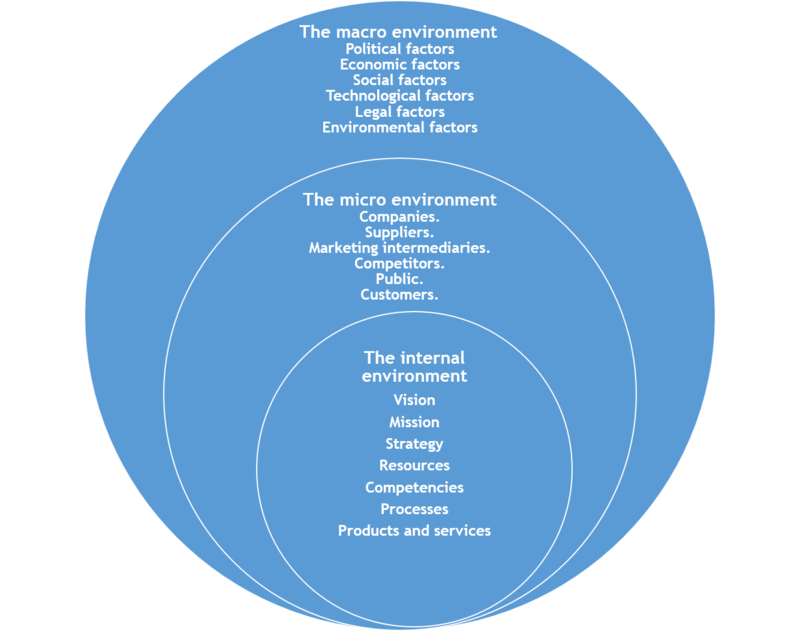
Figure 1 – The Components of the Business Environment
The term “environment” refers to the surroundings and conditions in which we live, which affect how we live. For example, natural factors such as air, water, rain and seasons affect how we live, and non-natural factors, such as the actions of governments, economic conditions, and moral values, affect our lives too.. The same applies to business.
A business also has the same experience, and its environment consists of the total sum of all internal and external factors, such as employees, customers, competitors, and economic conditions, that influence its operations, performance, and decision-making. They are complex, dynamic, and often uncontrollable factors that shape how a business grows, competes, and survives.
Main Components of the Business Environment.
The environment in which a business operates is usually divided into three categories: macro, micro, and internal factors, as depicted in Figure 1 above.
The Macro-environment.
The macro-environment consists of the global economy and markets. We live in a closely connected world now, and as a result, changes in one part of the world affect other parts. For example, the Middle East conflict between Israel, Iran and the United States is affecting oil transportation and causing oil prices and a corresponding increase in petrol prices. These changes are usually evaluated using PESTEL, which stands for “Political”, “Economic”, “Social”, “Technological”, “Environmental” and “Legal” factors.
The Microenvironment.
These are conditions or changes in the immediate surroundings of a business that affect its operations. It includes the suppliers, competitors, marketing intermediaries, customers, pressure groups and the general public.
The Internal Environment. Internal environmental factors are events that occur within an organisation. Generally speaking, internal environmental factors are easier to control than external environmental factors. Some examples of internal environmental factors are as follows:
- Management changes
- Employee morale
- Culture changes
- Vision
- Mission
As shown in the diagram above, many factors in the immediate and external environments affect a business. This relationship continues until the business is discontinued, but as long as the business exists, there are many environmental factors to contend with. Moreover, we live in a period of constant technological advancement, in which products and services are frequently made obsolete as new ones emerge. Consequently, monitoring the business environment is not only a source of startup business ideas but also vital to the continuous existence of a business.
The Modern Trend
The modern business environment is characterised by constant, rapid change, commonly referred to as a VUCA world (volatile, uncertain, complex, and ambiguous).
A VUCA world describes a business landscape defined by high levels of Volatility, Uncertainty, Complexity, and Ambiguity. Originally developed by the US Army in the 1990s, this framework is now used to describe a volatile global business environment characterised by rapid digital transformation, technological advancements, shifting consumer demands, and geopolitical disruptions.
- Volatility (V) refers to the speed, volume, and intensity of change, which is often unexpected and drastic.
- Uncertainty (U) shows a lack of predictability and difficulty in anticipating future events.
- Complexity (C) refers to the myriad factors and interconnected forces surrounding a decision, making it difficult to understand cause and effect.
- Ambiguity (A) refers to the lack of clarity about the meaning of an event, as the “rules of the game” are constantly changing.
How to Navigate a VUCA World
Navigating a VUCA (Volatile, Uncertain, Complex, Ambiguous) world requires replacing rigid planning with agility, fostering resilience, and adopting a clear, human-centred vision. Key strategies include using experiments to reduce ambiguity, building and using scenarios to plan for multiple futures, and encouraging team collaboration to increase speed and flexibility.
According to the World Economic Forum and management experts, overcoming this environment requires adopting a “VUCA Prime” approach to counteract these challenges (Huet, 2026).
- Volatility (Vision). This rapid churn is often driven by market volatility, such as fluctuations in commodity prices or changes in regulatory policies. These shifts can lead to significant disruptions in priorities and requirements. Tackle rapid, unexpected change with a clear vision and purpose. Focus on long-term goals while remaining flexible in how to achieve them. Embracing agility allows us to adapt quickly and effectively to evolving demands.
- Uncertainty (Understanding). In an era of rapidly changing industries, the business world is marked by uncertainty. We don’t always know what we don’t know, and it’s challenging to anticipate when our customers’ needs will change and what will be important to them in the future. Moreover, we cannot predict how our competitors will react to market dynamics. To address this uncertainty, it is crucial to rely on just-in-time requirements based on real-time data insights. Counter a lack of predictability by gathering information, listening to stakeholders, and analysing data to create a well-understood “why” behind situations.
- Complexity (Clarity). Complexity is about the interconnectedness of multiple factors, stakeholders, and systems. In a complex environment, many variables are at play, and they often influence others in non-linear ways. A feedback loop might emerge between two elements, for instance, rapidly causing a surprisingly large response. As sci-fi fans will know, even three elements interacting is enough to create a chaotic and unpredictable outcome. Resolve complex, multifaceted situations through clear and transparent communication processes. Simplify processes to make sense of chaos.
- Ambiguity (Agility). Ambiguity means that there are many ways to interpret a situation. Priorities are hazy, and the path forward isn’t clear-cut. Metrics may be shifting unexpectedly, results diverging in a way that suggests unseen factors at work. Different people may have different, even conflicting, perspectives. If VUCA’s uncertain U acknowledges that the future is unknowable, the ambiguous A applies when it’s unclear what’s happening right now!
As a leader, your job is to create clarity and alignment. Synthesise information, connect the dots, and articulate a clear vision and direction for your team. Adapt to unfamiliar situations by being agile, testing ideas, quickly testing ideas, and learning from failures.
The Main Behaviours Required for VUCA for Success
Success in a VUCA (Volatility, Uncertainty, Complexity, Ambiguity) environment requires shifting from traditional, rigid management to a more flexible, human-centric, and forward-looking approach. The main behaviours required are summarised by the “VUCA Prime” framework—Vision, Understanding, Clarity, and Agility—supported by emotional intelligence and resilience.
Here are the key behaviours required for success:
Vision (To Counter Volatility)
- Clear Strategic Direction. Retaining a clear, long-term vision while remaining flexible on the path to achieve it.
- Proactive Anticipation. Actively scanning the horizon to predict risks and changes rather than merely reacting to them.
- Purpose-Driven Leadership. Using a strong sense of purpose to guide the team when priorities shift rapidly.
Understanding (To Counter Uncertainty)
- Active Listening & Communication. Spending more time listening, communicating, and fostering informal dialogue to reduce anxiety and increase shared knowledge.
- Curiosity and Learning Agility. A commitment to continuous learning, questioning assumptions, and acquiring new knowledge more quickly.
- Empathy and Emotional Intelligence. Understanding the challenges, emotions, and perspectives of the people to enhance trust.
Clarity (To Counter Complexity)
- Simplifying Complex Issues. Breaking down complex, interconnected problems into manageable parts.
- Collaborative Decision-Making. Moving away from siloed working to cross-functional collaboration and inclusive, team-based decision-making.
- Transparent Communication. Providing consistent, honest messaging to maintain trust when the future is unclear.
Agility (To Counter Ambiguity)
- Adaptability and Flexibility. Being willing to change plans, adopt new technologies, and abandon obsolete processes.
- Experimentation and Risk Tolerance. Cultivating a “no-blame” culture that encourages trying new ideas, quick experimentation, and learning from failures.
- Rapid Decision-Making. Making decisions with incomplete information, balancing data with intuition.
Resilience and Self-Awareness
- Psychological and Physical Resilience. Developing the ability to recover from setbacks, manage stress, and maintain calm under pressure.
- Self-Awareness. Knowing your own strengths and weaknesses to leverage the team’s complementary skills effectively.
Leading in a VUCA (Volatile, Uncertain, Complex, Ambiguous) world is widely recognised as a major challenge which renders traditional, top-down leadership styles ineffective. Successfully navigating this landscape requires a shift toward a “new breed” of leadership focused on agility, emotional resilience, and the ability to embrace vulnerability.
The Environmental Monitoring Cycle
Effective monitoring is not a one-time event but a continuous cycle that enables proactive adaptation:
- Identify Information Needed. Determine key data points required for decision-making (e.g., shifts in market demand or new regulations).
- Collect and Analyse Data. Delegate the gathering of internal and external data to appropriate teams.
- Synthesise Findings. Transform raw data into actionable insights by connecting internal and external factors to identify trends.
- Embed into Strategy. Integrate findings into strategic plans, budgets, and operational changes.
- Continuous Monitoring. Actively track key assumptions and environmental shifts to trigger new cycles of action.
Key Frameworks for Analysis
- SWOT Analysis. Evaluates internal Strengths/Weaknesses and external Opportunities/Threats.
- PESTLE Analysis. Examines the macro-environmental factors (Political, Economic, Social, Technological, Legal, Ecological).
- Scenario Planning. Scenario planning is a strategic, proactive tool used by organisations to navigate uncertainty by exploring multiple plausible futures rather than predicting a single outcome. It involves identifying key trends and critical uncertainties, such as economic shifts or technological changes to develop, test, and prepare for different scenarios, ultimately improving decision-making, agility, and risk management.
Importance of Monitoring Changes
Continuous monitoring is essential for maintaining a competitive edge in volatile markets.
- Mitigating Threats. Early identification of risks (e.g., new regulations, competitor actions) prevents being blindsided.
- Leveraging Opportunities. Spotting emerging trends (e.g., new technology, changing consumer preferences) creates a first-mover advantage.
- Compliance. Ensuring the business aligns with new legal and regulatory requirements.
Best Practices for Implementation
- Foster a Monitoring Culture. Encourage all employees to identify and share information about environmental changes.
- Leverage Technology. Use AI and automated tools for real-time scanning of news, social media, and regulatory filings.
- Document Assumptions. Record the assumptions underlying strategic plans and track them against actual data.
- Use Cross-Functional Teams: Form teams to analyse opportunities or threats from multiple perspectives.
Regularly updating business environment analyses allows companies to shift from a reactive to a proactive stance, ensuring they remain relevant and profitable.
References
Alfonsius, G. (2020) “WHAT IS BUSINESS?” Garry Alfonsius, 2(Business), p. 9. Doi: 10.1787/FIN_SME_ENT-2016-11EN.
Glaeser, W. (2015). VUCA-WORLD. [online] VUCA-WORLD. Available at: https://www.vuca-world.org/.
Huet, G.A. (2026). Cooperation as a competitive edge: Thriving in a VUCA world. [online] World Economic Forum. Available at: https://www.weforum.org/stories/2026/01/cooperation-as-a-competitive-edge-thriving-in-a-vuca-world/.
Kennedy, A. by R., Jamison, with E., Simpson, J., Kumar, P., Kemp, A., Awate, K. and Manning, K. (2020). 3.3 Evaluating the General Environment. [online] pressbooks.lib.vt.edu. Available at: https://pressbooks.lib.vt.edu/strategicmanagement/chapter/3-3-evaluating-the-general-environment/.
Smith, J. (2026). What is Business Environment? A Comprehensive Guide. [online] The Knowledge Academy. Available at: https://www.theknowledgeacademy.com/blog/business-environment/ [Accessed 17
The Economic Times, India. (2026). What is ‘Business’. [online] Available at: https://economictimes.indiatimes.com/definition/business?from=mdr [Accessed 6 May 2026].