

This page provides a summary of the main processes to consider when starting a business. As every business is not the same, these guidelines are not exhaustive.
If you are thinking of starting a business, there are things you need to consider to ensure the best chance of success. It is important to decide what you will call your business and your product or service. What sort of structure will it have, and how will you run it? Additionally, you must consider creating customers and where the money will come from for setting up while the business finds its feet. However, as a founder, you can only start with an idea of the kind of business you want to start. If you do not have an idea, you do not have a starting point, as nothing can be done without it.
The general understanding of a start-up is that it is just any new business that someone starts. But this is not so. Defining a startup is not that easy nowadays, as it is more than just launching a business. The most commonly cited definitions of a startup are those of Steve Blank, Eric Ries, and Paul Graham.
Forbes defines a Startup as “a business designed for rapid growth. Unlike traditional companies built for predictable operations, startups focus on scalable models that can expand quickly without a proportional increase in costs. Startups prioritise innovation, speed and market disruption over long-term operations.” (Baldridge, 2024).
Research by Alshibani et al. (2025) reveals the advantages and disadvantages of adopting a completely agile methodology or combining it with traditional methods, such as a business plan when starting a business. The research h divided the participants into three groups: “super agile,” based totally on agile start-up methodology; (2) “hybrid”, a combination of agile start-up and business planning, and (3) “average” entrepreneurs aspiring to use both methodologies but failing to implement them effectively. The findings show:
- “Super agile” entrepreneurs reported the highest adaptability and innovation but faced challenges in scalability and investor relations.
- The hybrid group achieved the most balanced venture performance, leveraging the adaptability of agile start-ups with the structure of business planning.
- The “average” group reported lower venture performance outcomes due to inconsistent implementation of both methodologies.
Main Characteristics of a Startup
The common features of these definitions of a startup can be summarised as follows:
The Main Differences between a Startup and a Small Business
Main Distinctions
The Stages and Processes

The stages and processes of a startup typically include the following:
- Market research. Validating your idea by analysing your target audience and studying competitors to ensure genuine market demand exists for your product or service.
- Writing a business plan. Creating a formal blueprint outlining your business model, target market, revenue streams, and financial projections.
- Choosing a legal structure. Deciding whether to operate as a Sole Trader, Partnership, or Limited Company.
- Registering the business. Registering with the appropriate authorities or institutions. In the UK, this is done through GOV.UK.
- Building your brand. Creating a marketing strategy and establishing your online and physical presence to attract customers.
- Launching. Introduce your minimum viable product (MVP) or service to the market and adapt based on early user feedback.
Business Plan
For agile startups, the most appropriate business plan is a dynamic, iterative model rather than a static, 50-page document. The Lean Canvas and the Lean Startup Methodology are the industry standards, designed specifically for rapid testing, learning, and pivoting.
The main characteristics of an agile business plan include:
Market Research
For an agile startup, the most appropriate market research is lean, iterative, and behavioural. Instead of relying on traditional, large-scale focus groups or static reports, agile startups use fast-paced qualitative and quantitative methods to test assumptions, gather direct customer feedback, and validate ideas in real time.
The main methodologies include:
This approach prioritises actionable metrics (like conversion and retention) over vanity metrics, allowing founders to pivot or persevere based on actual user data.
Customer Development
Customer development is a framework that helps organisations validate product ideas with real users to ensure they solve actual problems. Popularised by Steve Blank as a core pillar of the Lean Startup methodology, it operates on the principle that “there are no facts inside your building; go outside to test them”.
The concept is typically broken down into four distinct phases:
- Customer discovery. Interviewing target users to understand their pain points and validate whether a genuine problem exists.
- Customer validation. Testing your proposed solution (like a prototype or MVP) to confirm that users are willing to pay for it.
- Customer creation. Scaling the product, launching marketing campaigns, and driving market demand to build a larger user base.
- Company building. Transitioning from a search-focused startup to a scalable organisation with dedicated departments and corporate roles.
By prioritising direct feedback over internal assumptions, the approach helps businesses avoid building products that no one actually wants.
Build-Measure-Learn Loop
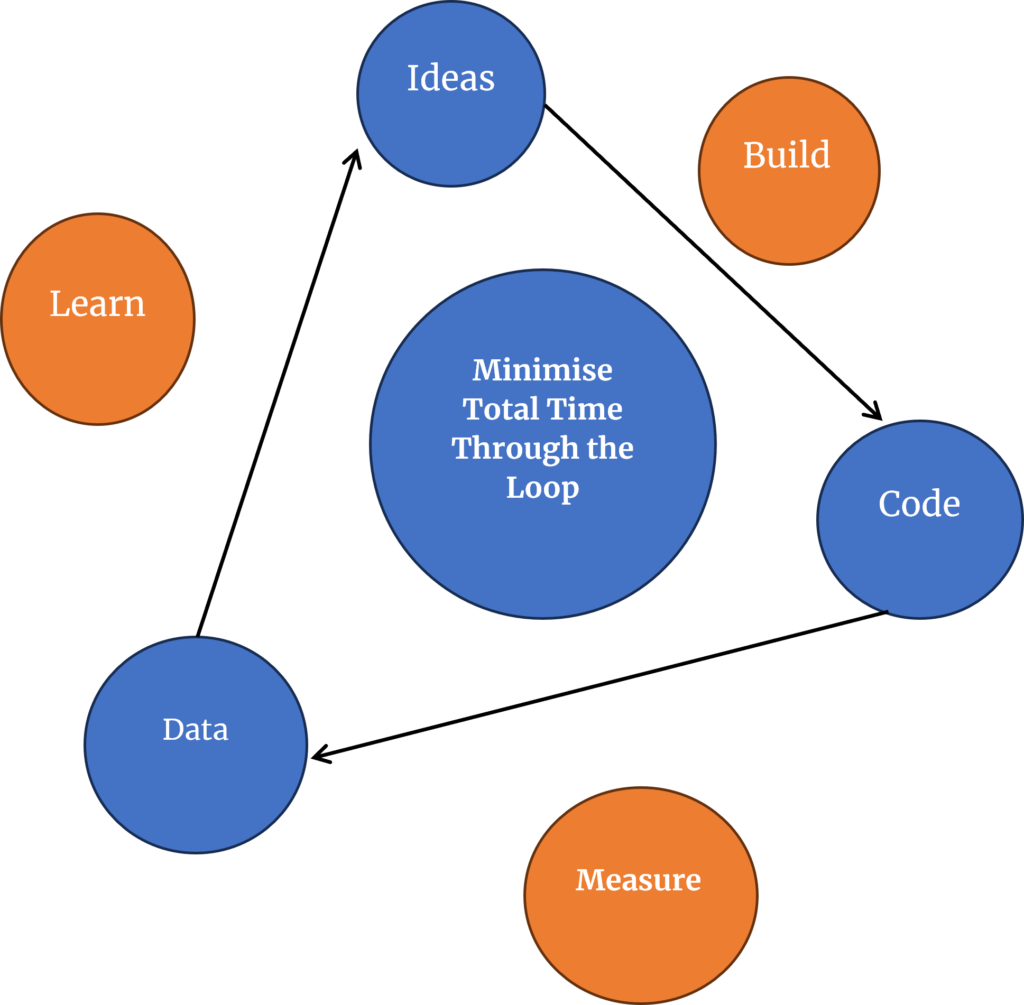
Figure1: Build-Measure-Learn Loop. Adapted from Lean Startup Methodology, Ries, E. (2011).
The Build-Measure-Learn Loop is a key framework based on the Lean Startup Methodology. It is designed to accelerate product development by minimising waste through three cyclical steps: creating a prototype, testing it to gather data, and using the insights from that data to decide whether to adapt your strategy or proceed forward.
The fundamental activity of a startup is to turn ideas into products, measure how customers respond, and then learn whether to pivot or persevere. All successful startup processes should be geared to accelerate that feedback loop.
How the Loop Works
- Build. Instead of building a final product, you create a Minimum Viable Product (MVP), the smallest, simplest version of an idea required to test a specific assumption.
- Measure. You release the MVP to a small, target group of users and observe how they interact with it. This phase is focused on tracking actionable metrics (such as conversion, retention, and engagement) rather than vanity metrics (like total sign-ups or page views)
- Learn. You analyse the data gathered to determine whether your initial assumptions were validated or invalidated. This step forces you to confront the reality of how customers behave. Based on the insights, you must make a critical decision: The Main Purpose Is Pivot or Persevere
At the end of each cycle, the team must make a critical decision. Either pivot or persevere. You pivot if the data proves your initial idea was flawed; you alter your strategy and test a new hypothesis without starting from scratch. You persevere. If the MVP validates your assumptions, you use the newly acquired data to refine and scale the current product.
The Startup Process
Starting a business is a process. IBM defines a process as “…. a set of related activities, along with supporting information such as data and content. The activities can be part of a structured flow, or ad-hoc activities that are not part of a structured flow” In other words, from the time the idea is conceived to when it is launched, there are stages of development to go through. This process is iterative and may not follow a specific sequence, though certain steps must be completed before others.
However, breaking it down into stages is convenient and enhances understanding. Fortunately, these stages have been studied by academics and practitioners, leading to the development of proven steps that, if taken in the right order, can provide a solid foundation for success.
The startup process is an iterative journey of finding a real-world problem, validating demand, building a minimum viable product (MVP), and securing initial sales. Instead of blindly writing code or building inventory, founders rapidly test assumptions through localised customer outreach and build upon confirmed revenue.
Problem Identification and Market Research
Rather than starting with an abstract idea, successful startups begin by identifying a painful, frequent, and expensive problem experienced by a specific group of people.
Validating demand
Before investing time and money, you must validate that a market is willing to pay for your solution.
Building the Minimum Viable Product (MVP)
The MVP is the simplest version of your product that delivers core value to users and can be done within 1 to 4 weeks.
There is a common saying that “There is no perfect architecture. There is only the architecture that fails in the least painful way, that you can evolve out of, and that your team can actually build.” Instead of endlessly debating patterns or framework choices, the focus should be on practical adaptability. You can validate your current design against these three core questions to know when your architecture is “good enough” to ship:
- Does the team understand and feel confident operating it?
- Does it solve the current business problem?
- Can it be changed without rewriting everything? (Ensure reversibility by using abstractions)
Acquire Initial Customers and Iterate
Securing your first 10 to 20 paying customers is the true test of a functional startup.
Growth, Structuring, and Scaling
Once initial users are retained and their feedback is integrated, it is time to build out the operational and financial foundations of the business.
References
Alshibani SM, Tarabashkina L, Lindsay N, Reed GA, Ramadani V (2025), “From creation to growth: examining agile and business planning for sustained ventures”. International Journal of Entrepreneurial Behaviour & Research, Vol. 31 No. 9 pp. 2230–2248, Doi: https://doi.org/10.1108/IJEBR-12-2024-1468
Baldridge, R. (2024). What Is A Startup? How Do Startups Work? – Forbes Advisor. [online] www.forbes.com. Available at: https://www.forbes.com/advisor/business/what-is-a-startup/.
Blank, S. (2010). Steve Blank What’s A Startup? First Principles. [online] Steve Blank. Available at: https://steveblank.com/2010/01/25/whats-a-startup-first-principles/.
Blank, S. (2010). Steve Blank What’s A Startup? First Principles. [online] Steve Blank. Available at: https://steveblank.com/2010/01/25/whats-a-startup-first-principles/ [Accessed 18 July 2026].
Bernstein, P.A. and Newcomer, E. (2009). Chapter 5 – Business Process Management. [online] ScienceDirect. Available at: https://www.sciencedirect.com/science/article/pii/B9781558606234000056 [Accessed 1 Feb. 2023].
Graham, P. (2012). Startup = Growth. [online] www.paulgraham.com. Available at: https://www.paulgraham.com/growth.html.
Hecht, J. (2017). Are You Running A Startup or Small Business? What’s The Difference? [online] Forbes. Available at: https://www.forbes.com/sites/jaredhecht/2017/12/08/are-you-running-a-startup-or-small-business-whats-the-difference/ [Accessed 18 July 2026].
IBM. (2026). What is a process. [online] Available at: https://www.ibm.com/docs/en/dbaoc?topic=overview-what-is-process [Accessed 14 Apr. 2026].
Indeed Career Guide. (2024). The definition of a startup business (Features and tips). [online] Available at: https://uk.indeed.com/career-advice/career-development/definition-of-start-up-business [Accessed 17 July 2026].
Ries, E. (2011). The Lean Startup | Methodology. [online] theleanstartup.com. Available at: https://theleanstartup.com/principles [Accessed 18 July 2026].
Simonson, J (2026). What Is A Startup? How Do Startups Work? – Forbes Advisor. [online] www.forbes.com. Available at: https://www.forbes.com/advisor/business/what-is-a-startup/ [Accessed 18 July 2026].