

Entrepreneurship can be categorised into two foundational systems: the entrepreneurial eco system and the entrepreneurial framework. They shape and govern entrepreneurship. However, it is more precise to view the entrepreneurial ecosystem as the living, interconnected environment and the framework as the strategic or analytical model used to design, measure, or build that ecosystem.
Before we continue, it would be helpful to understand what an ecosystem means.
For example, Duke University’s Entrepreneurial Process breaks the entrepreneurial process into five phases: idea generation, opportunity evaluation, planning, company formation/launch, and growth (Duke, 2022).
The Build-Measure-Learn (BML) Loop
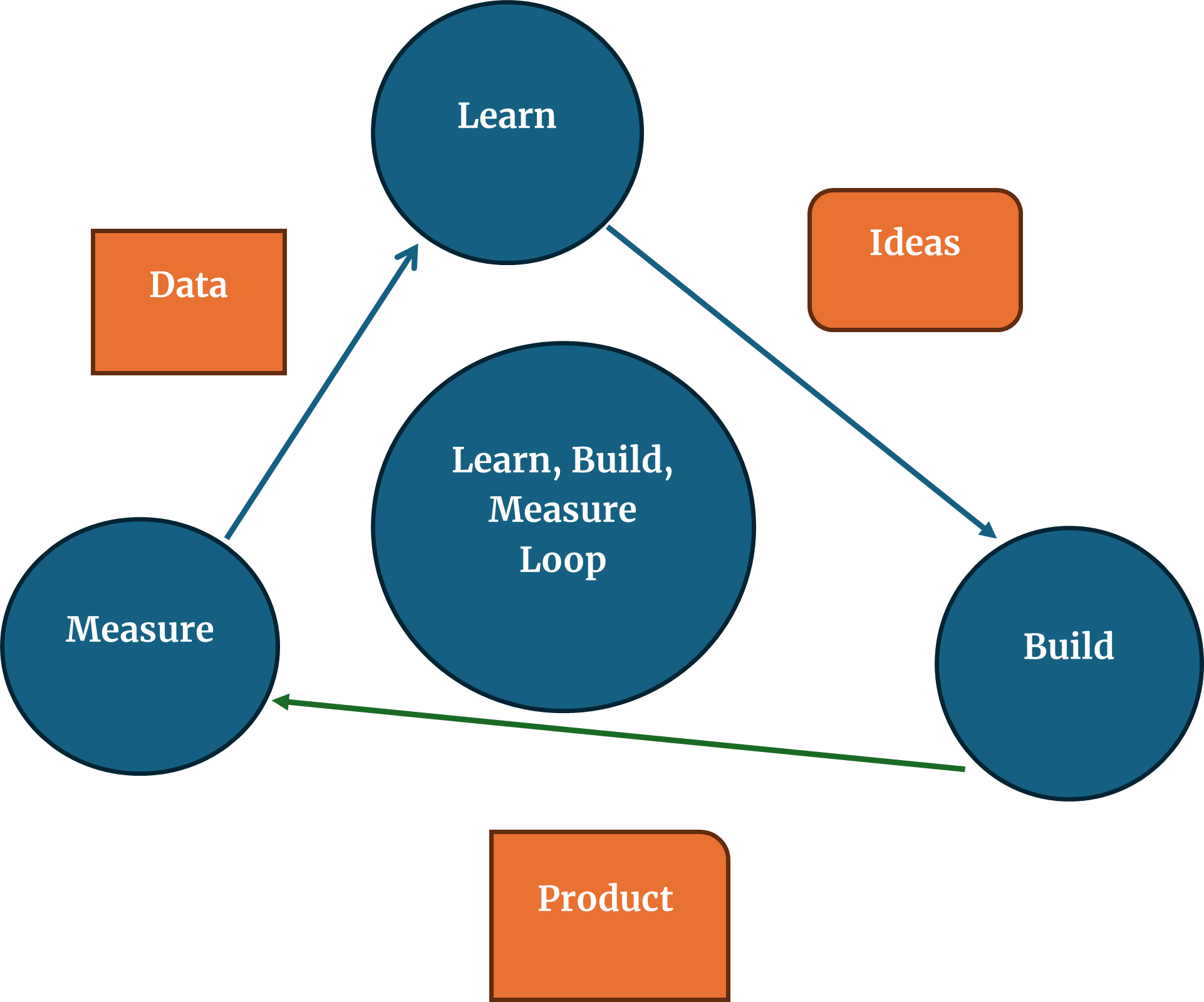
Figure 1: The Build-Measure-Learn (BML) Loop: Source The Lean Startup Methodology (Ries, 2015).
The Build-Measure-Learn (BML) loop is a core Lean Startup methodology designed to minimise waste and accelerate product development. It is an iterative process in which teams build a Minimum Viable Product (MVP), measure customer interactions using actionable metrics, and learn whether to pivot or persevere, aiming to reduce the total time through the cycle (Frederiksen and Brem, 2017).
A Minimum Viable Product (MVP) is the version of a new product that allows a team to collect the maximum amount of validated learning about customers with the least effort. It features only core functionalities required to satisfy early adopters and validate product demand, reducing development risks and costs (Ries, 2015). It is easy to misunderstand the reasoning behind the MVP. The purpose of a Minimum Viable Product (MVP) is to test a product concept, validate assumptions, and gather maximum validated learning about customers with minimum effort. It enables organisations to launch quickly to a niche audience, reducing development costs and risks by gathering real-world feedback before fully investing.
The concept of a Minimum Viable Product (MVP) absolutely applies to services, often referred to as a Minimum Viable Service(MVS) or a Concierge MVP. As with physical products, the goal is to validate a business idea, test customer demand, and gather feedback with the least amount of effort and cost before fully investing (Hovhannes, 2025).
Main Stages of the Loop
- Build. Creating a Minimum Viable Product (MVP) or prototype with minimum effort to test a hypothesis, rather than a complete product.
- Measure. Evaluating how customers interact with the MVP using metrics (qualitative and quantitative) to assess progress.
- Learn. Analysing data to validate or invalidate assumptions, deciding whether to “pivot” (change direction) or “persevere” (stay on course).
Usage Examples & Scenarios
- Landing Page Testing. Creating a landing page with a sign-up button before building a full app to gauge interest (measuring click-through rates).
- A/B Testing Features. Launching two different versions of a feature to see which one converts better.
- Customer Interviews. Incorporating interviews into the “Measure” phase to understand why users act a certain way (qualitative data).
- “Five Whys” Technique. Using “Five Whys” to identify the root cause of a problem discovered during the measure phase.
Synonyms and Similar Concepts
- Validated Learning Loop. (coined by Eric Ries). This is the BML in Figure 1 above. This is the main theme of the Lean Startup methodology, testing business hypotheses through rapid, iterative cycles to prevent waste.
- Iterative Prototyping. Iterative prototyping is a design methodology based on a continuous cycle of prototyping, testing, analysing, and refining a product. Instead of aiming for a perfect design on the first attempt, this approach creates successive, improved versions (iterations) based on user feedback and testing results. It is widely used in software development (Agile), UX design, and industrial design to reduce risk, lower costs, and ensure the final product meets user needs.
- Agile Development Loop. This is similar in that it focuses on rapid feedback. The Agile development loop is an iterative, continuous cycle designed to deliver functional software through short, incremental stages (typically 1–4 week sprints). It prioritises constant feedback, collaboration, and adaptability over rigid planning, focusing on planning, development, testing, and reviewing to improve quality and meet user needs.
- Hypothesis-Experiment-Results-Action Model. The Hypothesis-Experiment-Results-Action (HERA) model is an iterative, four-stage cycle based on the scientific method used to solve problems, validate assumptions, and drive decision-making through empirical evidence. It is widely used in scientific research, business innovation (such as the Lean Startup methodology), and data analytics to minimise risk by testing ideas before full implementation.
- Double Loop Learning (or multiple parallel experiments, as used by some firms). Double-loop learning is a process that challenges underlying assumptions, beliefs, and policies rather than just fixing immediate errors. Developed by Chris Argyris, it goes beyond single-loop learning (adjusting actions) by questioning the governing goals and strategies themselves. This approach enables deep, transformative change, fostering innovation and better decision-making by changing the underlying “mental model”(Hahn, 2021).
The Main Principles of BML Loop
- Start with “Learn”. Ideally, the process begins by identifying what you need to learn, then deciding what to build, rather than building blindly.
- Speed is Key. The faster you go through the loop, the higher the learning rate and the lower the cost of mistakes.
- Validating Assumptions. The goal is to prove or disprove core hypotheses about the business model (desirability, viability, feasibility).
Our Entrepreneurial Framework
Our entrepreneurial framework follows the same structured process and model used to turn ideas into value-creating ventures, involving three main stages: conecption,, design and creation, and execution. It is adapted from the Business Model Canvas, the Lean Startup Model, Design Thinking and the Duke University Entrepreneurial Process, which break the entrepreneurial process into five phases: idea generation, opportunity evaluation, planning, business formation/launch and growth (Duke, 2022).
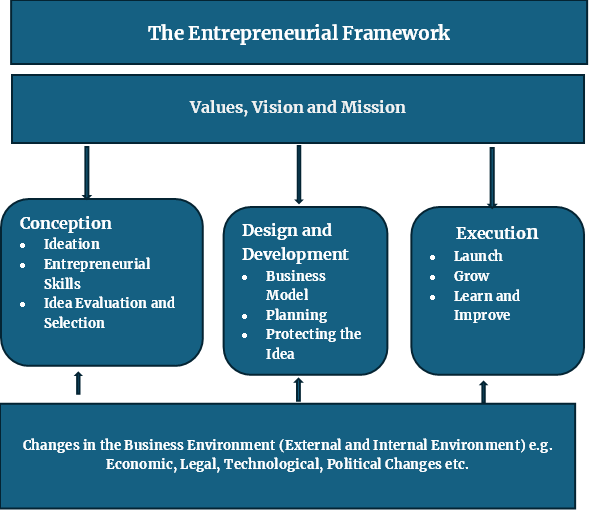
Figure 2 – The Entrepreneurial Framework. It Is an Adaptation of the Business Model Canvas, the Design Thinking Process, the Lean Methodology and the Duke University Entrepreneurial Framework.
The Business Model Canvas (BMC)
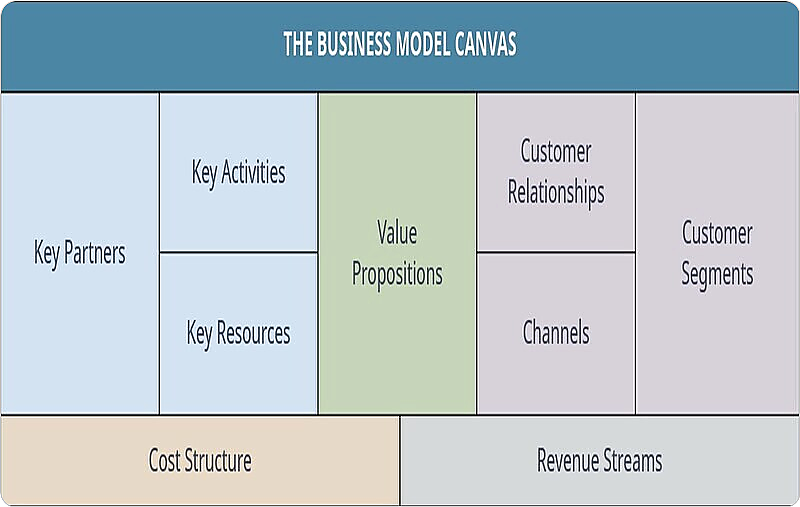
Figure 3: Business Model Canvas Shared Authored, Remixed, and/or Curated by LibreTexts
The Business Model Canvas (BMC) is a strategic, one-page template used to visualise, design, and assess a company’s value proposition, infrastructure, customers, and finances. Developed by Alexander Osterwalder, it breaks down a business into nine essential building blocks—covering key partners, activities, resources, value propositions, customer relationships, channels, segments, cost structure, and revenue streams. It is ideal for startups or pivoting existing businesses
The Design Thinking Process

Figure 4: The Design Thinking Process Shared Under CC License and Authored, Remixed, and/or curated by LibreTexts
Design thinking in business is a human-centred, iterative methodology for solving complex problems and fostering innovation by focusing on deep user empathy, prototyping, and testing. It bridges creativity with practical business needs, helping teams redefine problems and create, test, and implement user-centric solutions.
Back to Our Entrepreneurial Framework
The Business Start-up Framework simply divides the process of starting a business into three main categories: conception, design and development, and execution. It provides a summary of what to do at each stage. It is a very good portrait to start with.
Business Conception, which includes
Business Conception, which includes:
- Coming up with the business idea (Ideation)
- Ensuring the cultivation of skills needed to succeed in entrepreneurship
- Idea evaluation and selection
- Ideation and problem validation
- Identify a real problem. Focus on genuine frustrations people face, not just “cool ideas”.
- Validate demand. Ensure the problem is worth solving for a significant audience before building.
- Define value proposition (UVP). Clearly define what makes your solution unique.
Design and Development.
This includes:
- Using the Startup framework or model below to design the business
- Startup Design Process (Lean Approach). As already discussed, the lean approach to startup design focuses on rapid experimentation, validated learning, and customer feedback to minimise waste and build successful products. Key elements include building a Minimum Viable Product (MVP) to test hypotheses, iterating based on data, and using the Build-Measure-Learn loop, allowing startups to pivot, or change direction, without wasting capital.
- Rapid Prototyping. Creating low-fidelity models to test ideas more quickly without building the whole product.
- Design-Led Focus. Creating a “design system” and prioritising user experience (UX) to build trust and credibility.
- Iterative Design. Using, for example, the 5-step Design Thinking process (Empathise, Define, Ideate, Prototype, Test) to continuously refine.
Product Development (MVP)
- Build the MVP. Focus on developing only the most essential features to enter the market fast and gather feedback.
- Multidisciplinary Team. Structure teams to cover product design, engineering, and sales.
- Agile Methodology. Iterate quickly based on real user data, often using a 90-day blueprint to validate.
Essential Stages of Development
- Ideation. Brainstorming and research.
- Concept Development. Feasibility and market potential check.
- Prototyping. Building early models for user testing.
- Detailed Design. Finalising UI/UX, interface, and branding.
- Production/Launch. Releasing to the market.
Key Success Factors
- Founder-Market Fit. Finding a founder who understands the industry and is passionate.
- Manage Resources. Match investment to the stage; keep it lean pre-seed.
- Protect IP. Secure patents, trademarks, or copyrights early.
- Async Workflows. Use tools like Loom to maintain momentum.
Planning
A startup requires a comprehensive, actionable business plan that serves as a roadmap, detailing the company’s vision, market research, and financial projections (1–3 years) to attract investors and secure funding. The plan should be concise, featuring a strong executive summary, clear revenue models, competitor analysis, and marketing strategies, tailored to the specific industry.
Key Components of a Startup Business Plan:
- Executive summary. A concise, high-level summary of the business, its purpose, and funding requirements.
- Company description. Defines the company structure, mission, and vision.
- Market and industry analysis. Detailed research on target customers, market size, trends, and competitors.
- Product/service offering. A clear description of the product and its unique selling proposition.
- Operating and marketing plan. Outlines how the product will be created, sold, and marketed.
- Financial projections. IncludesiIncome statements, cash flow forecasts, and funding requirements.
Types of Business Plans for Startups:
- Lean startup plan. A one-page, high-level summary focusing on key elements like value proposition, infrastructure, and financial targets, ideal for testing concepts.
- Traditional/detailed plan. A comprehensive document (often 15–25 pages) required for bank loans or substantial venture capital investment.
Why a Plan is Essential
- Securing Funding. Banks and investors require detailed financials to evaluate risk.
- Strategic Direction. Defining goals, targets, and timelines to measure success.
- Attracting Talent. Helps convince potential partners and key hires to join the venture.
A business plan forces you to think critically about your business. When you sit down to write a business plan, you are forced to think about every aspect of your business, from your product or service to your target market and competition. This process of critical thinking can help you identify potential problems and develop solutions before they become roadblocks. A business plan gives you a roadmap for success. A good business plan will not only outline your goals and strategies, but it will also provide a timeline for achieving them. This roadmap can be an invaluable tool for keeping your team on track and ensuring that everyone is working towards the same goal.
Protecting the Business.
Key legal aspects of startups include establishing a formal business structure (e.g., limited company), protecting intellectual property (IP) through patents and trademarks, drafting employment contracts, ensuring regulatory compliance, and managing data privacy. Properly managing these areas from the outset is crucial for avoiding disputes, attracting investment, and ensuring long-term operational success.
Key Legal Areas for Startups
- Business structure and formation. Choosing between a sole trader, a partnership, or a limited company affects tax obligations, personal liability, and fundraising capabilities.
- Intellectual property (IP) protection. Securing trademarks, patents, and copyrights for brand names, inventions, and creative works is critical for protecting the company’s value.
- Employment law and contracts. Properly drafting employment contracts, non-disclosure agreements (NDAs), and non-compete clauses is essential for protecting business assets.
- Contracts and agreements. Creating robust, legally binding agreements for suppliers, vendors, and clients protects the company’s interests and minimises risk.
- Regulatory compliance and data privacy. Adhering to industry-specific regulations, health and safety regulations, and data protection laws (e.g., GDPR) is mandatory.
- Taxation and financial reporting. Understanding local and national tax obligations, including payroll taxes, is necessary to avoid penalties.
- Funding and investment issues. Understanding legal implications of fundraising methods, such as angel investing or loans, ensures smooth, compliant operations.
Synonyms/Related Terms
- Startup legal requirements
- Startup regulatory compliance
- Company incorporation
- Intellectual property protection
- Commercial contracts
Usage Examples of Legal Aspects
- Registering a unique brand name with the Intellectual Property Office to protect it from competition.
- Drafting an NDA before discussing a prototype with a potential supplier to protect proprietary technology.
- Issuing employment contracts with confidentiality clauses to protect trade secrets.
- Filing tax returns through a qualified accountant.
- Consulting with a solicitor to choose between a, sole trader or limited company structure.
Execution and launch
- Launch
- Learn and grow.
“Launch, learn, and grow” is a strategic framework for businesses and individuals to iterate quickly by launching projects, gathering real-world data (learning), and scaling based on insights. It emphasises action over perfection, using live, iterative testing to pivot or expand, as seen in programs supporting startups or digital transformation
Key Aspects of Launching
- Launch. Initiating a project, product, or business swiftly (e.g., a “Minimum Viable Product” or MVP) to gain live market feedback. It focuses on getting into the market, not just perfecting a product beforehand.
- Learn. Gathering data from real user interactions and performance metrics. This stage is crucial for understanding what works and what doesn’t, transforming projects, and making evidence-based improvements.
- Grow. Using the insights from the “learn” phase to optimise, scale, and achieve sustainable development. This includes expanding business operations, improving efficiency, or improving leadership skills.
Usage Examples & Contexts
- Business startup support. Programs like the Enterprise programme provide mentoring to help entrepreneurs launch their business, learn from initial sales, and grow their company.
- Digital/tech development. Companies often use this approach to release features early, learn from user behaviour, and iterate, treating the post-launch period as a “golden age” for growth.
- Training and education. “Launch and Learn” is used in training to start with value-added interaction, continue with ongoing education, and build skills over time.
- Policy/government. Initiatives like the “Test, Learn and Grow” programme encourage public service delivery models to adapt to new, data-driven approaches.
Synonyms & Related Concepts
- Launch. Start, initiate, release, pilot.
- Learn. Analyse, evaluate, understand, test, discover.
- Grow. Scale, expand, evolve, improve, develop.
- Related concepts: Agile methodology, Lean startup, Test-and-learn, and Iterative development.
The Business Startup Model
| Vision, Values and Mission: What is the story behind your business that you want people to talk about? What are your core values? | ||
| Resources | What solutions do you have to solve the problems? Are they authentic? | The problem |
| Where are you now, and do you have the capabilities required to launch the business | The opportunity you have spotted in the sector or industry you are interested in. Is the timing right? | What business problems in your area of interest are you solving? |
| Solutions | Customer Segment | Unique Value Proposition |
| What solutions do you have to solve the problems? Are they authentic | What value are you offering that will make customers prefer your offerings | Who are your ideal customers? Is the market large enough to sustain your business? |
| How are you going to measure whether things are working per your original idea or whether to change course? | ||
| Measurement | ||
| What solutions do you got to solve the problems? Are they authentic | ||
Essentially, this model encourages taking risks by launching fast to avoid long, unproductive research phases, allowing the project to evolve in response to real-world experience.
References
(Bernstein and Newcomer, 2009)
Bernstein, P.A. and Newcomer, E. (2009). Chapter 5 – Business Process Management. [online] ScienceDirect. Available at: https://www.sciencedirect.com/science/article/pii/B9781558606234000056 [Accessed 1 Feb. 2023].
Principles of Transaction Processing (Second Edition) The Morgan Kaufmann Series in Data Management Systems 2009, Pages 121-139Chapter 5 – Business Process Management Philip A. Bernstein, Eric Newcomer, Chapter 5 – Business Process Management, Editor(s): Philip A. Bernstein, Eric Newcomer, In The Morgan Kaufmann Series in Data Management Systems, Principles of Transaction Processing (Second Edition), Morgan Kaufmann, 2009, Pages 121-139, ISBN 9781558606234, https://doi.org/10.1016/B978-1-55860-623-4.00005-6. (https://www.sciencedirect.com/science/article/pii/B9781558606234000056
The Business Startup Framework and Architecture.
Entrepreneurship isn’t just about having a great idea or starting a business – it’s a strategic framework that requires understanding multiple interconnected dimensions. Think of these dimensions as the essential building blocks that transform a simple business concept into a thriving enterprise. According to Harvard Business School’s Howard H. Stevenson, successful entrepreneurship operates across six critical dimensions that distinguish true entrepreneurs from mere business owners. These dimensions create a comprehensive approach to building and scaling ventures, focusing on opportunity recognition, strategic commitment, risk management, resource optimization, organizational design, and value creation.
- Strategic orientation: Being driven by opportunity
- Commitment to opportunity: The decisive step for maximum output
- The commitment process: Managing risk through sequential steps
- Control of resources: The art of efficient utilization
- Management structure: Flat and informal networks
- Reward philosophy: Valuing creation and team contribution
- Integrating the dimensions for entrepreneurial success
According to Harvard Business School’s Howard H. Stevenson, successful entrepreneurship is defined by pursuing opportunity “without regard to resources currently controlled”. Stevenson identified six critical dimensions that distinguish true entrepreneurs from administrative managers: strategic orientation, commitment to opportunity, commitment process, control of resources, management structure, and reward philosophy.
Springer Nature Link
Springer Nature Link
+3
The Six Critical Dimensions of Entrepreneurship
Strategic Orientation: Driven by a perception of opportunity, whereas administrators are driven by controlled resources.
Commitment to Opportunity: Entrepreneurs identify and pursue opportunities quickly, focusing on the potential rather than just the risks.
Commitment Process: Entrepreneurs use a multi-staged, iterative commitment of resources with minimal exposure at each stage, rather than committing all resources upfront.
Control of Resources: Focuses on renting, borrowing, or using resources episodically to remain agile, rather than ownership.
Management Structure: Prefers flat, informal networks to facilitate rapid decision-making and communication, rather than hierarchical, rigid structures.
Reward Philosophy: Focuses on compensation based on value creation and high upside potential, rewarding team performance rather than solely seniority or status.
FSM.How
FSM.How
+4
These dimensions illustrate that, according to Stevenson, entrepreneurship is a behavioral approach to management, not merely a personality trait
The six dimensions of entrepreneurship – Extract from: “Mastering Entrepreneurship”, FT Prentice Hall, 2000 by Howard Stevenson